Story
20 June 2025
Advancing solidarity for refugees through action
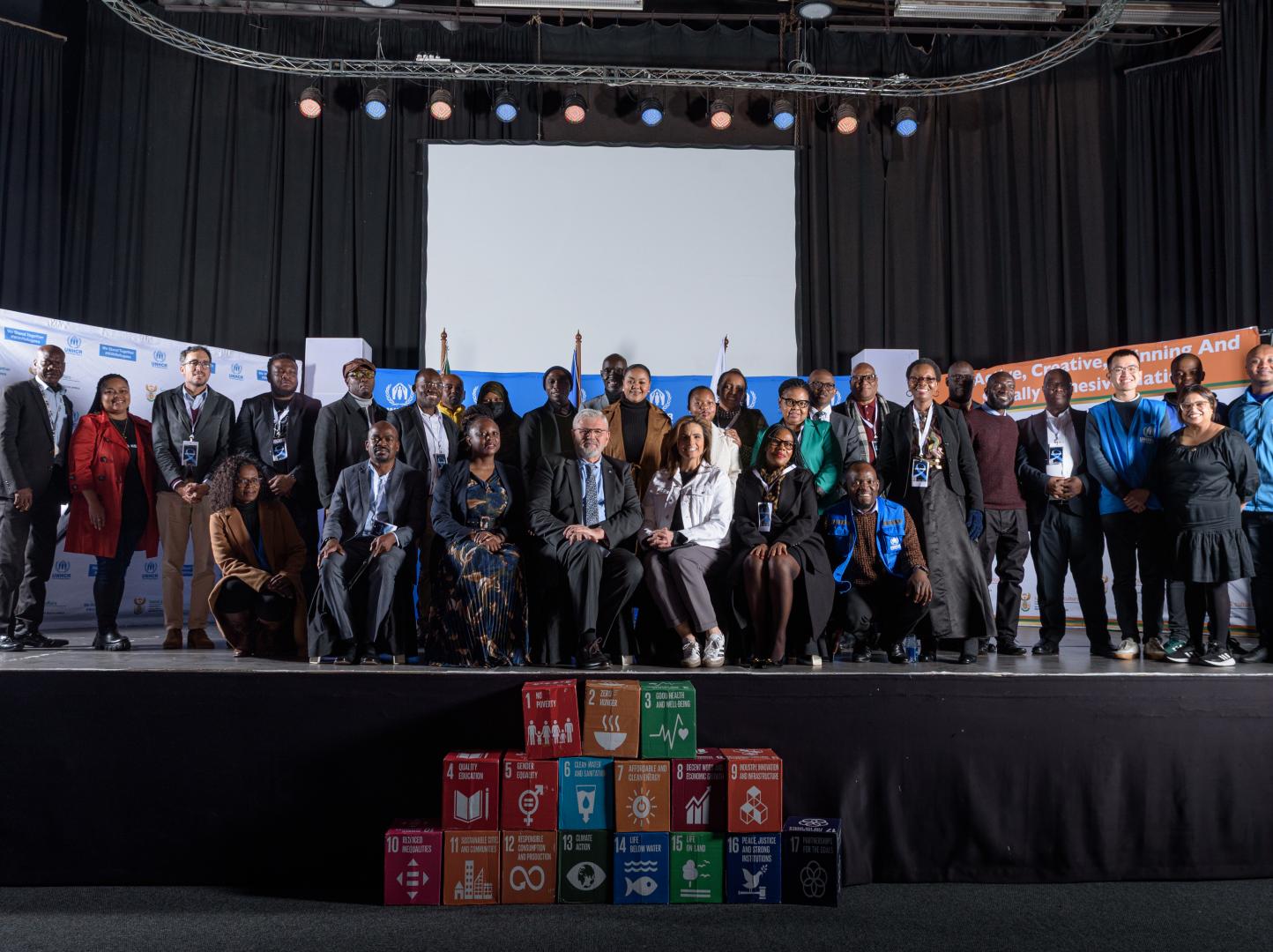
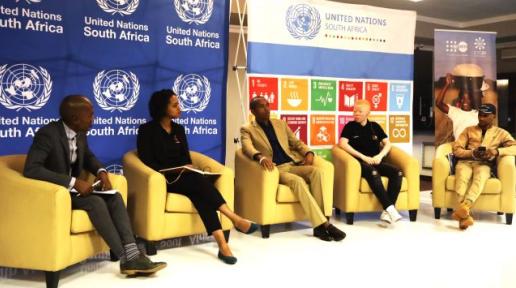
World Refugee Day 2025 was marked by a powerful call for solidarity and inclusion, as the United Nations High Commissioner for Refugees joined hands with the South African Government and key stakeholders to honour refugees and the communities that host them. Held on 20 June 2025, at the Heartfelt Arena in Thaba-Tshwane, Pretoria, the commemoration carried the global theme “Solidarity with Refugees.” It came at a critical time, with forced displacement reaching record levels of over 122 million people globally, according to UNHCR’s latest Global Trends Report.This year’s commemoration served as a platform to recognize the courage of those forced to flee conflict and persecution, while also celebrating the compassion extended by the communities that welcome them. The programme brought together high-level government officials, members of the diplomatic corps, civil society representatives, refugee-led organisations, and private sector leaders reflecting a shared commitment to protecting the rights and dignity of displaced people.Mr. Igor Ciobanu, UNHCR Representative a.i, formally welcomed guests, setting the tone for a day rooted in solidarity and shared commitment. Delivering remarks on behalf of the United Nations, Mr Nelson Muffuh, UN Resident Coordinator, drew attention to the growing disconnect between rising refugee needs and diminishing global support.“Becoming a refugee is never a choice—but how we respond is,” he said, quoting the UN Secretary-General. “Let us choose solidarity. Let us choose courage. Let us choose humanity.” Muffuh also emphasized South Africa’s longstanding role as a regional haven for the displaced.” As part of the day’s commitments, Mukuru, represented by Pearl Mphuthi, Head of Corporate Social Investment (CSI), generously donated R20,000 to UNHCR in support of its refugee programmes. In her remarks, Mphuthi underscored the importance of empathy, inclusion, and the shared human experience, highlighting that true solidarity begins with recognizing that belonging is a right, not a privilege. “Celebrating humanity means standing with those who’ve lost everything. Belonging is a right—not a privilege.” In a further show of solidarity, Zhauns Marketing Executive, Mr. Riad Ahmed, donated baking machinery to support refugee entrepreneurs in building sustainable livelihoods. Similarly, Ashraful Aid’s CEO pledged USD 10,000 towards UNHCR’s efforts in South Africa, reinforcing the importance of collaborative support from across sectors.The day also emphasised the legal and policy frameworks essential for refugee protection. Adv. Aubrey Sedupane, representing the Department of Justice and Constitutional Development, referenced the Prevention and Combating of Hate Crimes and Hate Speech Bill, urging that solidarity must be matched with action:“Let us go beyond words—toward legislative reform, safe spaces, and the upholding of dignity, equality, and the principle of Ubuntu.”Echoing these sentiments, Mr. Mandla Madumisa, Chief Director of Asylum Seeker Management at the Department of Home Affairs, reflected on the 30th anniversary of South Africa’s Constitutional Court, calling for continued constitutional protection of refugees:“Standing with refugees is standing with the Constitution.”Refugee-led networks took to the stage to shed light on the daily realities and systemic challenges faced by displaced communities in South Africa. Through powerful and emotional testimony, representatives called for urgent policy responses, including a one-time amnesty for individuals who lost legal documentation during the COVID-19 pandemic, decisive action to end corruption, and a renewed sense of empathy and compassion from host communities.“Where must we go?” asked one representative. “Africa did not shut its doors during apartheid. We ask you not to slam them on us now.” Their voices served as a reminder that beyond policy and programming, the lived experiences of refugees must be heard, respected, and placed at the centre of all protection efforts.A standout feature of the day was a high-level panel discussion on “Sport for Social Cohesion”, moderated by renowned broadcaster and UNHCR Goodwill Ambassador Leanne Manas. The panel brought together a distinguished lineup of speakers, including acclaimed pulmonologist and former refugee Dr Emmanuel Taban, alongside respected academics, policymakers, and sports leaders.The discussion explored how sport can act as a unifying force between refugee and host communities, while promoting inclusion, healing, and mutual understanding. Panellists emphasised the importance of elevating refugee voices—particularly those of women, youth, and children—in sport-related initiatives. The session also facilitated dialogue among researchers, practitioners, and decision-makers, sharing best practices and calling for sustained support to strengthen sport as a tool for social cohesion.The day concluded with a vibrant celebration of culture, resilience, and community. Guests were treated to captivating performances by dancers from the South African Dance Academy and a lively Congolese cultural group, whose traditional and contemporary routines embodied the spirit of unity and belonging. These artistic expressions complemented the broader programme of activities, which included a basketball tournament organised in collaboration with Sunnyside Basketball Club and Judo for Peace promoting health, teamwork, and social cohesion.World Refugee Day 2025 served as a powerful reminder that when we act together with empathy, respect, and purpose we can build societies rooted in hope, dignity, and shared humanity. Now more than ever, we are called to stand with refugees not only in words, but in action.