


Latest
Photo
21 October 2026
University of Pretoria marks World Peace Day
Learn more
Speech
13 October 2026
Why I Still Believe Africa Can Choose Its Future - Remarks by Nelson Muffuh, UN Resident Coordinator
Learn more
Press Release
09 October 2026
UN in South Africa congratulates Judge Navanethem "Navi" Pillay on Nobel Peace Prize
Learn more
Latest
The Sustainable Development Goals in South Africa
The Sustainable Development Goals are a global call to action to end poverty, protect the earth’s environment and climate, and ensure that people everywhere can enjoy peace and prosperity. These are the goals the UN is working on in South Africa:
Story
24 October 2025
Greening, Cleaning and Pledging for Climate Action as South Africa Celebrates 80 years of the United Nations
Written by: Nombulelo MalingaTo commemorate the 80th anniversary of the United Nations, the UN family in South Africa hosted a vibrant community outreach event at the Pretoria Art Museum, bringing together youth, local partners, members of the diplomatic community, and civil society. The event was designed to honour the UN’s legacy of peace, development, and human rights while mobilising collective action around climate justice, environmental stewardship, and inclusive progress.The programme invited participants to support the greening of the museum grounds, contribute to a clean and healthy environment, and engage with inspiring art that celebrates creativity and sustainability. Activities included a community clean-up, tree planting, a museum walk-through, an art unveiling, and a climate action pledge signing.Opening the event, Nelson Muffuh, the UN Resident Coordinator in South Africa, shared a message of unity and purpose. “Performing acts of service to the community is what the UN is all about. Doing this as part of our UN Day commemoration is truly befitting. We appreciate the collaboration. When we work in synergy, we can achieve,” he said, adding, “This year’s theme is about doing better together, not only conserving but restoring nature, art, and empowerment.” Welcoming guests on behalf of the Pretoria Art Museum, Melissa Lindeque, Cultural Officer, expressed the museum’s pride in hosting the event. She told participants, “We are honoured to be part of this celebration of the United Nations’ 80th anniversary. The museum is not only a space for art but for community and dialogue. Today’s activities show how creativity and collaboration can inspire real change.” “As we commemorate 80 years of history, heritage and humanity, we are reminded of our shared responsibility to safeguard the environment for future generations,” said Meseret Zemedkun, UN Environment Programme (UNEP) Representative in South Africa. She reaffirmed UNEP’s commitment to advancing a clean, healthy and sustainable environment, underscoring that progress is strongest when the UN works as one family — united in service to people, planet and Member States in pursuit of harmony.Students from Tshwane University of Technology and the University of Pretoria led the clean-up and tree-planting activities, demonstrating the UN’s belief in youth as key agents of change.Among the distinguished guests was Miss Earth Fire 2025, Enhle Moleya, who joined youth and UN staff in pledging support for climate action and a just energy future. Her presence added visibility and inspiration to the day’s message of environmental responsibility.A central feature of the event was the Climate Action Pledge, a collaborative initiative between the UN in South Africa and the Joint SDG Fund. The pledge segment was introduced by Sine Movundlela, an energy expert with the UN in South Africa, who welcomed participants and spoke on the significance of UN Day and the role of the Joint SDG Fund in advancing South Africa’s Just Energy Transition. She highlighted the importance of youth in climate action and the UN’s commitment to leaving no one behind. “The Joint SDG Fund is about enabling communities to lead the transition to clean energy. Today’s pledges reflect our shared commitment to climate justice, equity, and sustainable development,” she said.Participants signed a branded pledge wall, committing to statements such as:
“I pledge to advocate for the inclusion of women, youth, and marginalised groups in climate action.”
“I pledge to take practical steps, such as reducing energy waste and supporting green initiatives.”
“I stand with the United Nations and the Joint SDG Fund in building a sustainable future for all.”Leanne an environmental sciences student, added her voice to the pledge.
“I pledge to support a fair and inclusive transition to clean energy in my community. By planting trees and picking up litter, we’re making our environment healthier for future generations.” The event also featured a powerful art exhibition by environmental activist and artist Natania Botha, whose work sparked dialogue on peace, sustainability, and youth leadership.
“Art has the power to end wars and spark reflection,” she told the audience. “It’s an honour to have my work used to inspire conversations about the United Nations and our shared responsibility.” Natania announced that she would be donating her artwork to the UN as her personal contribution to building a better future. As the world faces growing challenges from climate change to inequality, the UN Day 2025 commemoration in South Africa served as a powerful reminder of what is possible when “we the peoples” act together. Through environmental stewardship, artistic expression, and youth-led pledges, the UN family reaffirmed its commitment to peace, inclusion, and sustainability.The event was led by the United Nations Communications Group (UNCG) and brought together a wide range of partners, including Gauteng Province, the City of Tshwane, Tshwane University of Technology, environmental artist Natania Botha, Plastics SA, Junior Chamber International (JCI), Miss Earth Fire 2025 Enhle Moleya, members of the diplomatic community, the Joint SDG Fund, and the United Nations in South Africa, underscoring a collective commitment to climate action, community engagement and sustainable development.
“I pledge to advocate for the inclusion of women, youth, and marginalised groups in climate action.”
“I pledge to take practical steps, such as reducing energy waste and supporting green initiatives.”
“I stand with the United Nations and the Joint SDG Fund in building a sustainable future for all.”Leanne an environmental sciences student, added her voice to the pledge.
“I pledge to support a fair and inclusive transition to clean energy in my community. By planting trees and picking up litter, we’re making our environment healthier for future generations.” The event also featured a powerful art exhibition by environmental activist and artist Natania Botha, whose work sparked dialogue on peace, sustainability, and youth leadership.
“Art has the power to end wars and spark reflection,” she told the audience. “It’s an honour to have my work used to inspire conversations about the United Nations and our shared responsibility.” Natania announced that she would be donating her artwork to the UN as her personal contribution to building a better future. As the world faces growing challenges from climate change to inequality, the UN Day 2025 commemoration in South Africa served as a powerful reminder of what is possible when “we the peoples” act together. Through environmental stewardship, artistic expression, and youth-led pledges, the UN family reaffirmed its commitment to peace, inclusion, and sustainability.The event was led by the United Nations Communications Group (UNCG) and brought together a wide range of partners, including Gauteng Province, the City of Tshwane, Tshwane University of Technology, environmental artist Natania Botha, Plastics SA, Junior Chamber International (JCI), Miss Earth Fire 2025 Enhle Moleya, members of the diplomatic community, the Joint SDG Fund, and the United Nations in South Africa, underscoring a collective commitment to climate action, community engagement and sustainable development.
1 of 5

Story
08 December 2025
Clean Cooking Dialogue puts women at the centre of South Africa’s Just Energy Transition
Nkangala District, Mpumalanga – Globally, 2.3 billion people still lack access to clean cooking, which refers to safe, modern energy solutions such as liquefied petroleum gas and bioethanol. Millions of households continue to rely on wood, coal and paraffin, exposing women and children to toxic smoke, environmental degradation and the burden of hours spent collecting firewood. Household air pollution from these fuels causes more than three million premature deaths each year.Against this backdrop, the United Nations in South Africa, together with the Joint SDG Fund and technically led by UN Women, with participation from UNIDO and SEforALL, convened the Dialogue on Pathways for Women’s Economic Empowerment and Entrepreneurship through Clean Cooking Solutions in Nkangala District. The event also marked the 30th anniversary of the Beijing Declaration and Platform for Action, reaffirming women’s rights and leadership as central to sustainable development.Welcoming participants, the Nkangala District Municipality highlighted its commitment to being a “future-ready, climate-smart hub” and an economic centre for renewable energy.Dr. Hazel Gooding, Deputy Representative of UN Women South Africa, emphasised the urgency of accelerating clean cooking solutions:“Millions of households still rely on harmful fuels. Women spend hours collecting firewood, while toxic indoor air pollution takes lives and limits economic participation. Clean cooking is not just about energy; it is about empowerment. When households have access to modern clean solutions, women are safer, healthier and able to participate fully in economic and social life.”Mr. Thebe Mamakoko, Senior Energy Negotiator at the Department of Electricity and Energy, added:“As a department, we are honoured to join this engagement on accelerating clean cooking, which supports inclusive economic growth. Success at scale requires unified standards and strong coordination to mobilise financing and ensure long-term sustainability. Commitment, coordination and clarity of vision will deliver clean, safe and modern energy for households across South Africa.”The dialogue moved from high-level framing into panel discussions, where experts and entrepreneurs examined South Africa’s clean cooking value chains, industry practices in manufacturing and distribution, and pathways for women-led enterprises. Later sessions focused on strengthening institutional coordination and developing financing strategies to empower women entrepreneurs.Convened under the mandate of the Joint SDG Fund, one of the UN’s flagship instruments for accelerating integrated SDG solutions, the Dialogue brought together government leaders, UN agencies, financiers, entrepreneurs, innovators and community voices to generate actionable recommendations for national policy and a gender-responsive acceleration of clean cooking solutions.Entrepreneurs in attendance, including clean cooking innovators, training providers and alternative energy suppliers, expressed appreciation for the dialogue and echoed the urgency of advancing clean cooking solutions. They noted that while innovation is strong, barriers remain in accessing financing and in moving from concept to implementation at scale. These concerns fed directly into the Dialogue’s outcomes, where participants identified priority thematic areas to guide the next phase of South Africa’s clean cooking journey.Outcomes:
As a starting point, participants identified five key thematic areas to guide the next phase of South Africa’s clean cooking journey. These areas provide a strategic framework for collaboration and policy development:Clean Cooking Landscape and Existing Value Chains: Mapping current practices and opportunities for scale.Industry-Specific Practices: Advancing manufacturing, distribution and women’s empowerment within clean cooking value chains.Pathways for Women Entrepreneurs: Unlocking opportunities across the sector and ensuring women’s leadership in enterprise development.Institutional Coordination and Implementation: Strengthening arrangements to advance gender equality and women’s economic empowerment.Financing Plan Development: Designing strategies to empower women entrepreneurs and ensure long-term sustainability.These thematic areas will inform future work, ensuring that clean cooking is advanced not only as an energy intervention but as a driver of inclusive economic growth, gender equality and community well-being.
As a starting point, participants identified five key thematic areas to guide the next phase of South Africa’s clean cooking journey. These areas provide a strategic framework for collaboration and policy development:Clean Cooking Landscape and Existing Value Chains: Mapping current practices and opportunities for scale.Industry-Specific Practices: Advancing manufacturing, distribution and women’s empowerment within clean cooking value chains.Pathways for Women Entrepreneurs: Unlocking opportunities across the sector and ensuring women’s leadership in enterprise development.Institutional Coordination and Implementation: Strengthening arrangements to advance gender equality and women’s economic empowerment.Financing Plan Development: Designing strategies to empower women entrepreneurs and ensure long-term sustainability.These thematic areas will inform future work, ensuring that clean cooking is advanced not only as an energy intervention but as a driver of inclusive economic growth, gender equality and community well-being.
1 of 5

Story
12 November 2025
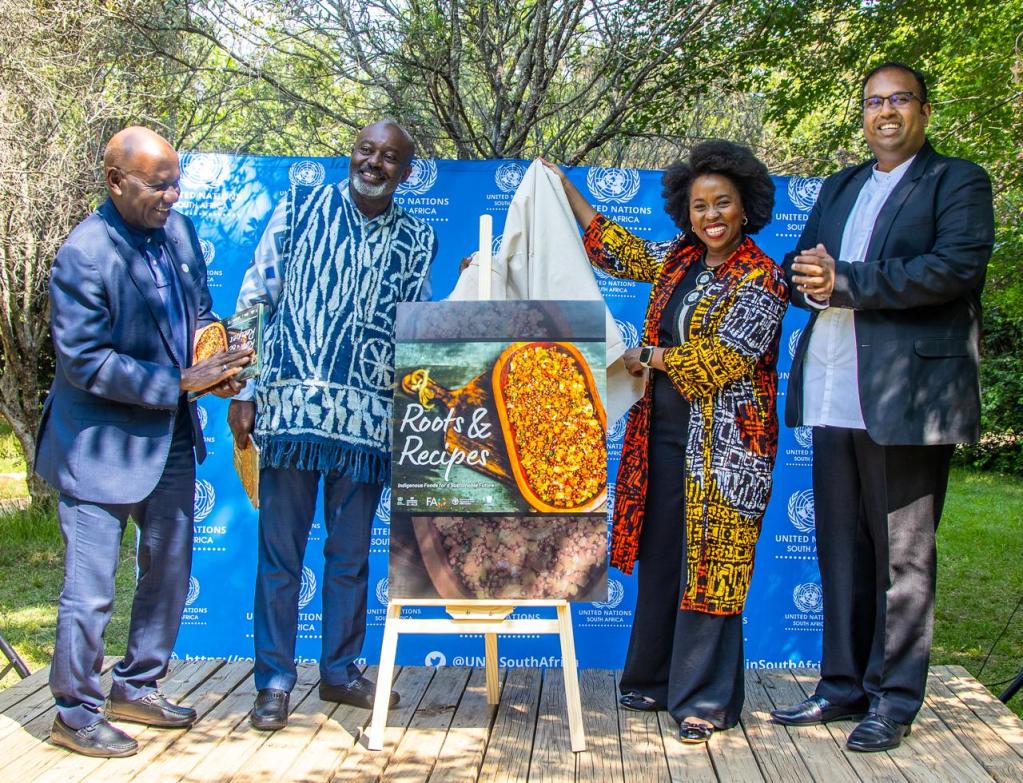
South Africa Celebrates Its Culinary Heritage with the Launch of “Roots & Recipes: Indigenous Foods for a Sustainable Future”
The United Nations, the South African Chefs Association (SACA), and the Gauteng Department of Agriculture and Rural Development recently launched Roots & Recipes: Indigenous Foods for a Sustainable Future — a book that celebrates South Africa’s indigenous cuisine while promoting food security, health, and climate resilience.The launch took place at the Nirox Sculpture Park in the Cradle of Humankind, bringing together chefs, farmers, policymakers, and community leaders to honour the country’s diverse food heritage and explore its role in sustainable development.Caption: Panel discussion at the book launchPhoto: © UN South AfricaSpeaking at the launch, Vuyiswa Ramokgopa, the Gauteng Member of the Executive Committee, described the cookbook as “a partnership between government, chefs, farmers, scholars, and communities. It embodies the best of what we can achieve when we work together: a fusion of science and tradition, innovation and heritage.”She reflected on the deeper meaning behind the project, noting that “to reclaim our indigenous foods is to reclaim our independence. To cultivate what is ours, in our soil, in our kitchens, in our schools, is to plant the seeds of resilience.”Ms. Ramokgopa emphasized the book’s alignment with the UN Sustainable Development Goals, particularly Zero Hunger and Climate Action, adding: “We are saying that African food is not primitive—it is prophetic. It holds the wisdom that can feed the future.”Nelson Muffuh, the UN Resident Coordinator in South Africa, highlighted the initiative as part of a broader UN effort to transform food systems and promote sustainable consumption and production.“Roots and Recipes is a celebration of heritage and a practical guide for sustainable livelihoods,” said Mr. Muffuh. “The answers to hunger, malnutrition, economic empowerment, and even climate stress are often right under our feet in indigenous crops like sorghum, millet, Bambara groundnut, and wild greens.”He underscored three key reasons these foods matter: “First, climate resilience — these crops are tough. They thrive in heat and drought when others fail. Second, nutrition — they are rich in fibre and micronutrients. Third, livelihoods — when we create demand for these foods, smallholders, especially women, win.”The speakers called on South Africans, particularly youth, to embrace and innovate with indigenous foods. Ramokgopa urged young people to see the cookbook not just as a collection of recipes, but as a call to action: “Let this book inspire you not only to cook, but to innovate. To start food businesses, to experiment with recipes, to use social media to tell the stories of our land.”Muffuh echoed this sentiment, encouraging the public to “take this book home, try a recipe, share a meal, and make it trend. Let us turn heritage into a movement, one plate at a time.”Roots & Recipes: Indigenous Foods for a Sustainable Future showcases traditional South African dishes from across the provinces, blending culinary storytelling with sustainability science. Developed in partnership with the SACA, the project connects culture, climate, and community, showing how food can drive both health and economic development.As Ms. Ramokgopa concluded, “This is not an ending. It is a beginning — of a movement to eat consciously, to farm sustainably, and to celebrate proudly. Let us teach our children that umngqusho, morogo, and amadumbe are not the foods of poverty, but the foods of power.”Media Contact:Mr Luthando Kolwapi, Partnerships & Communications Officer Luthando.Kolwapi@fao.orgCaption: Excited guests at the book launchPhoto: © UN South AfricaCaption: Panelists at the Roots & Recipe Cookbook launchPhoto: © UN South AfricaCaption: A vote of thanks to the guests from Luthando Kolwapi, Resource Mobilization, Partnerships & Communications Consultant at FAO Photo: © UN South Africa
1 of 5
Story
18 November 2025
Advancing Social Development and Justice: Reflections on the Second G20 Social Summit
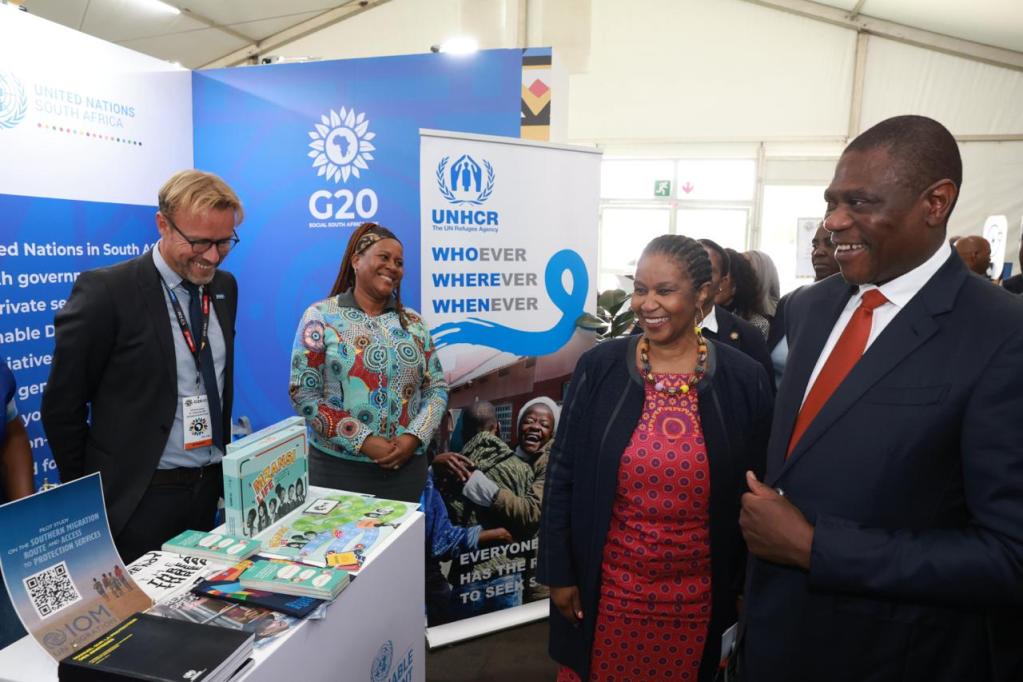
The ongoing Second G20 Social Summit in South Africa marks a pivotal moment for global governance and inclusive development. As stakeholders from civil society, community organisations, faith and traditional leaders, labour unions, entrepreneurs, and indigenous groups gather ahead of the G20 Leaders’ Meeting, the message is clear: social development and justice must stand at the heart of international cooperation.For South Africa, this conversation is deeply relevant. Our Country Analysis and the new United Nations Sustainable Development Cooperation Framework (2026–2030) underscore the urgency of tackling structural poverty, inequality, and governance deficits while building resilience against climate and economic shocks. These priorities are not abstract—they reflect the lived realities of millions and the aspirations of a nation committed to transformation.Social development and justice are foundational to the Sustainable Development Goals (SDGs). Without addressing inequality, hunger, and exclusion, progress on other goals—whether economic growth, education, or climate action—will remain elusive. South Africa’s context illustrates this interdependence: despite being an upper middle-income country, persistent disparities in access to jobs, education, and social protection continue to undermine social cohesion and stability. The Cooperation Framework responds to these challenges through the following underlying and integrated priorities:• Supporting Economic Growth and Social Inclusion• Tackling Structural Poverty and Inequality• Promoting Good Governance, Accountability, and Rights• Building Resilience through Sustainability and Risk Preparedness The G20 Social Summit amplifies these imperatives on a global stage. Under South Africa’s G20 Presidency and its theme of Solidarity, Equality, and Sustainability, the Summit seeks to elevate social justice and inclusion to the same level of urgency as macroeconomic and trade issues. This is not only about representation—it is about transforming governance to reflect the voices and needs of those historically marginalised. The United Nations in South Africa is proud to accompany and support this effort. Through our exhibition space at the Summit, we showcase the work of UN agencies driving progress on food security, gender equality, climate resilience, and social protection. These interventions align with the six SDGs transitions from the 2023 SDG Summit and included in our Cooperation Framework —food systems, energy access, digital connectivity, education, jobs and social protection, and climate action—each offering catalytic impact across the SDGs. As global leaders prepare to meet, the call from South Africa resonates worldwide: people—not profit, not politics—must be at the centre of development. Advancing social development and justice is not optional; it is essential for achieving the 2030 Agenda and ensuring that no one is left behind.
1 of 5
Story
17 November 2025
Partnerships for Progress: SABII Launch Signals a New Chapter for South Africa’s Businesses
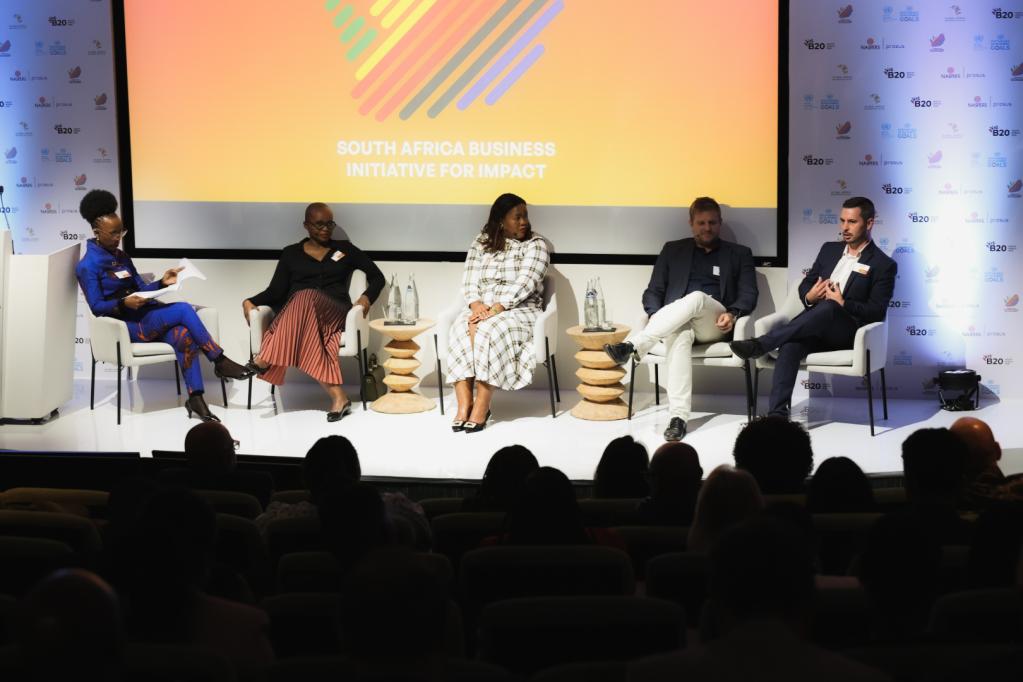
Johannesburg, 17 November 2025 – On any given morning in South Africa, a young entrepreneur opens her small logistics start-up not knowing whether the power will stay on long enough to meet a delivery deadline. A farm worker in Limpopo wonders if unpredictable rainfall will again wipe out the harvest that feeds his family. A recent graduate in Mamelodi scrolls through job boards, navigating a labour market that feels distant, exclusive, and unforgiving.Their realities, mirroring the struggles and hopes of millions, set the backdrop for the launch of the South Africa Business Initiative for Impact (SABII), a new bridge between business, government, and the United Nations.SABII was launched as a B20 side event during South Africa’s G20 Presidency, marking a landmark collaboration between the UN in South Africa, Naspers South Africa, the UN Global Compact South Africa Network, and B20 South Africa.As the national anchor for the Global Africa Business Initiative (GABI), SABII brought the momentum of the “Unstoppable Africa” movement to South Africa, uniting the UN and business leaders to drive tangible progress in four key areas: Energy Transition for Economic Security, Digitization for Inclusive Growth, Human Capital Development for Shared Prosperity, and Food Systems Transformation for Resilient Livelihoods. More than just a launch, SABII served as a call to action, an invitation to rethink partnerships, rebuild trust, and envision a future where development was powered not only by policy, but by people. Opening the event, Ms Phuthi Mahanyele-Dabengwa, CEO of Naspers, framed SABII’s mission around the lived experiences of ordinary South Africans. She emphasized that success must extend beyond companies to benefit communities, and that young people should encounter opportunities not obstacles in the digital and economic landscape. Drawing on the spirit of the “Unstoppable Africa” movement, she positioned SABII as a platform amplifying historically marginalized African voices in global growth conversations.UN in South Africa Resident Coordinator, Nelson Muffuh, urged translating ambition into measurable action as South Africa assumed its G20 presidency. His message was reinforced by UN Deputy Secretary-General Amina Mohammed, speaking via video, who stressed that partnerships must deliver results. She highlighted the critical role of finance in fostering inclusive growth, noting that a prosperous Africa strengthens global prosperity. “Let us make SABII a living example of what collective leadership can achieve. Let us ensure this platform delivers results that matter not just for South Africa, but for the continent. And let us keep SABII connected to global frameworks like GABI and the G20 priorities, so that our national efforts amplify Africa’s voice on the world stage.” - UN in South Africa Resident Coordinator, Nelson Muffuh B20 Sherpa Mr Cas Coovadia offered a sober, pragmatic perspective on the global economic landscape. With geopolitical instability and a fragmented global order, he argued, collaboration is no longer optional. Businesses must track commitments, ensure implementation follows recommendations, and align priorities across borders making partnership both an economic necessity and a pathway to inclusive, sustainable growth, he said. The UN Assistant Secretary-General and the UNDP Assistant Administrator and Director, Regional Bureau for Africa, Ahunna Eziakonwa, declared, “This moment matters,” challenging the outdated narrative of Africa as a passive aid recipient. Highlighting African innovation from the Takealot Data Hub to the Timbuktu Innovation Initiative she emphasized that Africa’s creativity and competence are now benchmarks shaping global markets.Sanda Ojiambo, Assistant Secretary-General and Executive Director, United Nations Global Compact, amplified Africa’s business narrative by stressing the power of narrative and collaboration. African business must be amplified, not merely appended. SABII, she noted, is more than a platform it is a vehicle to reshape how Africa’s business story is told to the world.The SABII launch convened a powerhouse of thought leaders, innovators, and changemakers to discuss Africa’s most pressing development frontiers, from digital transformation and green energy to human capital and climate-smart agriculture, sparking bold conversations on how the continent can harness its potential for inclusive, sustainable growth.Digitization: Sustaining Livelihoods in an increasingly digital world The first panel focused on how digital access is transforming everyday life and the economy. Speakers from Takealot, McKinsey Africa, and the Ministry of Small Business Development highlighted a crucial point: technology is becoming one of the most powerful tools for reducing inequality. Digital platforms are already helping small businesses reach new markets and giving young people new income opportunities. The panel also stressed that this future must be accessible to everyone. That means affordable data, reliable connectivity, and digital skills that match the jobs of tomorrow. They also warned against over-regulation of platform work. Instead, South Africa needs smart, balanced policies that protect workers while still allowing innovation to grow.Energy Transition: Green Mobility The second panel turned to the realities of South Africa’s energy transition. With experts from renewable energy companies, mobility platforms, and green technology, the conversation made one thing clear: the shift to clean energy is not just environmental, it is economic.Electric vehicles, renewable power, and green mobility can reshape entire industries, create new jobs, and make South Africa more competitive globally. But to make that shift possible, the country needs the right incentives, easier access to finance, and support for black-owned energy businesses trying to enter this fast-growing sector. Panelists also stressed that the transition must be fair. South Africans who depend on traditional transport and energy systems must not be left behind.Human Capital Development: Investing in Skills DevelopmentAnother important discussion centres on youth development, skills, and the future of work. Leaders from government, academia, and youth development organisations agreed that South Africa’s greatest competitive advantage is its young population.But this advantage only becomes real when young people have skills that match a rapidly changing Labour market. Speakers called for modernized training systems, stronger digital skills programmes, and more support for young women, who face even greater barriers. They also emphasized the need for fair and evidence-based systems that ensure young people benefit from new opportunities.Food Systems Transformation and Climate-Smart AgricultureThe conversation on food systems and climate-smart agriculture reminded everyone that food security is directly linked to climate security. As South Africa faces more frequent droughts, floods, and climate shocks, farmers need more support.Experts called for investments in climate-resistant crops, better farming technologies, and supply chains that can withstand extreme weather. This shift is not only about protecting food; it is about protecting livelihoods across rural and urban communities.Across all the panels, a clear message emerged: South Africa’s progress depends on partnership, intentional inclusion, and bold reimagining. Government, business, civil society, and the UN must work together to unlock opportunities across the digital, green, and agricultural economies, ensuring that youth, women, and marginalized communities are not just participants, but beneficiaries. Innovation must extend beyond technology to a new mindset, one willing to redesign old systems, embrace new models, and position Africa not as an observer, but as an active leader in global development conversations.The SABII programme demonstrated that South Africa possesses the ideas, expertise, and leadership to drive meaningful change, but what is now required is coordinated, measurable action that puts people at the center of progress. From digital transformation and green mobility to climate-smart agriculture, the path forward is clear: transformation must be partnership-driven, inclusive, and grounded in shared responsibility. Closing the event, Dr. Leila Fourie, CEO of the Johannesburg Stock Exchange, reminded attendees that thriving societies create thriving markets, a message that captured the spirit of the day. More than a launch, SABII represents a platform for collective action, a new chapter in South Africa’s social and economic renewal, and a renewed commitment to elevating Africa’s voice, strengthening public-private cooperation, and ensuring inclusive development lies at the heart of national progress.
1 of 5
Story
01 October 2026
From Heritage to Global Impact: MAXHOSA AFRICA Showcases the Power of South African Culture at Unstoppable Africa
At Unstoppable Africa 2026 in New York on 21 September 2026, South Africa brought another dimension of its economic story to the global stage: culture as an engine of enterprise, identity, jobs and global influence. Through a partnership between the United Nations in South Africa and Brand South Africa, MAXHOSA AFRICA, founded by designer Laduma Ngxokolo, showcased South African creativity alongside conversations on investment, technology, energy, trade and sustainable development during the 81st United Nations General Assembly. “The presence of MAXHOSA AFRICA was significant because it demonstrated that Africa’s economic opportunity is not confined to minerals, infrastructure, technology or financial markets. It also lies in the continent’s creative capital, cultural heritage, intellectual property, design and storytelling,” noted Nelson Muffuh, UN Resident Coordinator in South Africa. Unstoppable Africa, the flagship platform of the Global Africa Business Initiative, brought together leaders from business, government, investment, the United Nations, civil society, sport and the creative industries. In this setting, MAXHOSA AFRICA offered a tangible example of how African heritage can be translated into globally relevant enterprise while retaining strong connections to local production and identity. Culture as an economic asset Founded in 2010, MAXHOSA AFRICA draws inspiration from Xhosa cultural aesthetics and has developed these references into a contemporary African luxury brand. Its emphasis on African production and distinctive design illustrates how cultural heritage can become commercially viable intellectual property and create value across creative and manufacturing value chains. Brand South Africa has similarly highlighted MAXHOSA AFRICA as an example of how South African fashion can connect cultural identity with entrepreneurship, local production and livelihoods across the creative and textile sectors. The proposition extends beyond fashion. South Africa’s cultural and creative industries can contribute to entrepreneurship, employment, innovation and the country’s global investment proposition. Laduma Ngxokolo’s participation also connected South African creative entrepreneurship to a wider African conversation about ownership and value creation. As Africa seeks to capture greater value from its resources, markets and talent, the creative economy raises similar questions around intellectual property, brand ownership, market access and value retention. MAXHOSA AFRICA provides one example of this approach: a brand rooted in African heritage and production that is increasingly participating in global markets. Its international trajectory continued to expand in September 2026 with its first show on the official Paris Fashion Week calendar. From showcase to opportunity The MAXHOSA AFRICA activation demonstrated that cultural identity and commercial ambition can reinforce one another. It also highlighted the enabling conditions required for more creative enterprises to scale: access to finance and markets, skills development, intellectual property protection, local manufacturing capacity, digital capabilities and export pathways. For South Africa, the opportunity is to strengthen the ecosystem around its creative industries and connect emerging enterprises to investors, markets and international platforms. The significance of the New York showcase therefore extended beyond fashion. It presented South African creativity as an economic asset and a vehicle for global engagement, while demonstrating the potential of partnerships between government, business and the United Nations to amplify South African capabilities on the world stage. From Xhosa-inspired design in South Africa to a global audience in New York, MAXHOSA AFRICA demonstrated that culture can be both a repository of heritage and a platform for enterprise, innovation and economic transformation. The next step is to ensure that the partnerships and visibility generated on the global stage translate into opportunities for more South African creative enterprises to scale, create jobs and participate competitively in global markets.
1 of 5

Story
29 September 2026
From Investment to Impact: South Africa Builds Partnerships for Inclusive Growth
The central question was centered on unlocking opportunities and ensuring that investment translates into growing businesses, sustainable jobs and benefits that reach more communities. “We need to ensure that scale and growth lead to reducing inequality, because that's the impact we're trying to make,” said UN Resident Coordinator Nelson Muffuh.That challenge sat at the centre of two discussions Mr. Muffuh convened during the United Nations General Assembly High-Level Week. Both sessions were anchored in the South African Business Initiative for Impact (SABII), a platform bringing together Government, business, investors, development finance institutions, development partners and the United Nations around shared national priorities and collective action. Mr. Muffuh moderated the main-stage dialogue on South Africa as a gateway for investment, innovation and impact, then convened a closed-door SABII Leadership Roundtable focused on turning opportunity into practical development results.The global platform also highlighted the importance of economic diplomacy. Countries are shaped by facts, but also by perceptions, which can influence investment, trade, tourism, confidence and livelihoods. Presenting a fuller account of South Africa’s capabilities, reforms, creativity and regional role is therefore part of creating the conditions for partnership and investment. Growth that reaches peopleAcross discussions on industrialisation, the African Continental Free Trade Area, regional value chains, digital transformation, the energy transition, food systems, youth employment, skills development and investment mobilisation, participants repeatedly returned to the same practical question: how can ambition be converted into implementation?Minister of Trade, Industry and Competition Parks Tau emphasised collaboration between Government and business. "It is the success of Government and business working together to confront the challenges that we face," Mr. Tau said, before posing the next question: "How do we take the country to the next level?"He also pointed to reforms in South Africa's economic management, energy and transport, alongside industrial and trade strategies designed to strengthen regional value chains.Phuthi Mahanyele-Dabengwa, Chief Executive Officer and Executive Director of Naspers and SABII Co-chair and Champion, reinforced the private sector's role. Ms. Mahanyele-Dabengwa called for stronger economic cooperation within Africa and for African countries to participate in developing, not simply consuming, the digital technologies shaping the continent's future.Investment is more likely to create lasting jobs when it is matched by infrastructure, relevant skills, business support and access to markets.Connecting young people to opportunitiesAccording to Statistics South Africa, approximately 8.5 million people were officially unemployed in the second quarter of 2026, including approximately 5 million young people aged 15–34. A broader measure that also includes people in the potential labour force put the total at 13.1 million. The Youth Employment Service (YES) shows how private sector partnerships can expand pathways into employment. Since 2018, the programme has created approximately 250,000 paid, year-long work experiences through 2,000 companies and is currently providing around 40,000 placements annually. According to figures shared during the roundtable, 45 per cent of participants move into full-time employment, while 15 per cent start businesses.Paid work experience can help young people enter the labour market while enabling companies to contribute directly to the development of South Africa’s future workforce. Digital skills were another priority. Charles Murito, Google's Regional Director for Government Affairs and Public Policy in Sub-Saharan Africa, stressed the need to align education and training with employers' needs."The digital transformation opportunity is there today, not tomorrow," Mr. Murito said.Drawing on Google's experience recruiting senior software developers, Mr. Murito noted that demand for digital expertise is growing even as companies struggle to find candidates with the required skills. He called for "a more concerted effort" to connect those requirements with the education system.Partnerships involving Google, Microsoft and other technology companies are providing approximately 250,000 young people annually with training in artificial intelligence and other digital skills.Sport is also creating opportunities. Clare Akamanzi, Chief Executive Officer of NBA Africa, highlighted the economic impact of the Basketball Africa League, a partnership between NBA Africa and the International Basketball Federation.According to figures shared during the roundtable, the league has supported close to 40,000 jobs over six years across its host markets, including South Africa. Ms. Akamanzi also pointed to opportunities throughout the basketball ecosystem, including digital services, event management, nutrition, sports science and medicine.These examples show that partnerships across sectors can connect young people with skills, experience, employment and opportunities to build businesses of their own.Connecting finance to enterprises and marketsGovernment creates enabling conditions, businesses provide jobs and market opportunities, and financial institutions help enterprises expand. SABII seeks to organize this collaboration around shared priorities, connect institutions and actors that might not otherwise work together, and support the transition from dialogue to implementation. This reflects the UN’s convening role under the Cooperation Framework: aligning public and private leadership around national priorities and accelerating progress towards the Sustainable Development Goals.Makhosazana "Makhosi" Makhathini, Chief Executive Officer of South Africa's Industrial Development Corporation, explained how finance can be combined with practical support. Through the Industrial Development Corporation's Small and Medium-Sized Enterprise (SME) Connect programme, businesses are linked to commercial partners and new markets.She shared the example of a young entrepreneur who began by supplying cleaning products and is now expanding into food products through partnerships with major retailers, including Woolworths and Checkers. South Africa’s creative economy provided another expression of this opportunity. The showcasing of Maxhosa Africa and Naledi at the Unstoppable Africa Dinner demonstrated that the country’s story is not only one of investment and growth, but also of creativity, confidence, culture and global relevance. From dialogue to deliveryPartnership was the defining message of the week. The roundtable enabled partners to clarify the contribution each could make, from financing and policy support to technical expertise and market access, and to identify next steps for promising initiatives.Through SABII, the UN Country Team, led by Resident Coordinator Nelson Muffuh, will continue to support partners in carrying emerging collaborations forward, linking investment to the skills, markets, financing and institutional cooperation required for inclusive growth. SABII’s success will ultimately be measured by its ability to convert opportunities into partnerships, partnerships into investment, and investment into tangible impact for people and communities, all while advancing South Africa’s development priorities, the Sustainable Development Goals and the objectives of the UN Cooperation Framework.Please visit the UN team's website for more information about the UN's work in South Africa.
1 of 5

Story
22 September 2026
South Africa as a Gateway for Investment, Innovation and Impact
South Africa took centre stage at Unstoppable Africa 2026 with the global launch of the South African Business Initiative for Impact (SABII), a platform designed to strengthen collaboration between government, business, investors and development partners in support of inclusive growth and sustainable development. As South Africa's national anchor of the Global Africa Business Initiative (GABI), SABII aims to accelerate action across four national priorities: digitisation, energy transition, human capital development and food systems transformation. Hosted during the United Nations General Assembly High-Level Week, the SABII Main Stage Dialogue brought together Nelson Muffuh, United Nations Resident Coordinator in South Africa, Parks Tau, South Africa's Minister of Trade, Industry and Competition, and Phuthi Mahanyele-Dabengwa, Chief Executive Officer of Naspers South Africa, for a conversation focused on how South Africa can translate opportunity into investment, innovation and measurable impact. Turning Opportunity into Impact Opening the discussion, Muffuh reflected on South Africa's significant economic strengths, including globally competitive businesses, sophisticated financial markets, industrial capabilities and strategic resources. "The question is how we translate that opportunity into investment, partnerships, innovation, jobs and measurable impact at scale." He argued that South Africa's development challenge is not the absence of opportunity, but the need to connect investment, innovation and partnerships to implementation. "The challenge is to connect capability to capital, innovation to markets, investment to implementation, and economic growth to inclusion." The discussion emphasised that economic growth alone is insufficient unless it creates opportunities that reach communities, entrepreneurs and young people. South Africa's future competitiveness, participants agreed, will depend on its ability to build partnerships capable of turning ambition into practical results. A Shared Responsibility for Growth Minister Tau highlighted the importance of cooperation between government and business in addressing national challenges and creating conditions for sustainable economic growth. Reflecting on recent examples of successful collaboration, he emphasised that partnership has become a critical component of South Africa's reform and development agenda. "It is the success of Government and business working together to confront the challenges that we face." The Minister underscored the importance of creating an enabling environment for investment, industrial expansion, job creation and enterprise development. He stressed that economic transformation will require a shared commitment from both public and private sectors to unlock South Africa's full potential. Moving from Commitment to Impact Much of the conversation focused on the role of business as a development partner. Drawing on her experience through BUSA, Mahanyele-Dabengwa reflected on the progress achieved when organised business and government work together around common objectives. She cited partnerships that have contributed to improving energy security and supporting South Africa's removal from the FATF grey list as evidence that sustained collaboration can produce meaningful outcomes. "This relationship between business and government is critical." She described SABII as an important vehicle for ensuring that collaboration translates into tangible results. "SABII is critical in ensuring that our partnership with government as business is also impactful as well." For Mahanyele-Dabengwa, the success of SABII will depend on whether global conversations are converted into implementation at country level. "We're here to talk about moving from commitment to impact. We come to the global platforms, we talk about what needs to happen on the continent, but we must go back and make sure it happens." Positioning South Africa within a broader African transformation agenda, she added: "We're trying to position South Africa as the gateway for progress, for innovation, for transformation." She further highlighted SABII's alignment with both GABI and Unstoppable Africa, emphasising the opportunity to connect international momentum with local delivery. An Agenda for the Next Generation One of the strongest themes to emerge from the discussion was the importance of creating opportunities for young people. Mahanyele-Dabengwa emphasised that SABII must contribute to expanding youth participation in the economy and helping young Africans access employment and entrepreneurship opportunities. "What I love about SABII is the fact that this will also contribute significantly to the employment of youth." She continued: "This is something that is critical not only in South Africa, but across the continent, that we are able to ensure that we have youth who are enabled and also participants in the economy." A Platform for Delivery Throughout the dialogue, speakers repeatedly returned to one key principle: SABII must be a platform for action, not simply another forum for discussion. As Muffuh noted: "We are not seeking to create another platform where we simply catalogue South Africa's potential. We want to help organise the partnerships required to realise that potential." Closing the session, he challenged stakeholders to ensure that the initiative is ultimately judged by results. "The test of SABII will not be the quality of the conversation we have today. The test will be what we are able to deliver after today." The launch of SABII marks an important step in strengthening partnerships between government, business and development actors. More importantly, it signals a collective commitment to ensuring that investment, innovation and growth deliver measurable improvements in people's lives.
1 of 5

Story
21 September 2026
From Dialogue to Delivery: SABII Leadership Roundtable Focuses on Action, Investment and Inclusion
Following the public launch of the South African Business Initiative for Impact (SABII) at Unstoppable Africa 2026, senior leaders from government, business, development finance institutions, investors and the United Nations convened for a closed-door Leadership Roundtable focused on one central question: how can South Africa move from opportunity to implementation? The invitation-only session shifted the conversation from vision to delivery, examining practical solutions for mobilising investment, strengthening economic competitiveness, supporting youth employment and accelerating inclusive growth. Opening the discussion, Nelson Muffuh, United Nations Resident Coordinator in South Africa, stressed the importance of ensuring that growth translates into real developmental outcomes. "We need to ensure that scale and growth lead to reducing inequality, because that's the impact we're trying to make." Building a Partnership Economy A recurring theme throughout the Roundtable was the evolving role of the private sector in national development. Participants agreed that business should not be viewed simply as a source of financing but as a strategic partner capable of contributing expertise, innovation, implementation capacity and market access. Representing organised business, Cas Coovadia highlighted the need to address policy, regulatory, infrastructure and operational barriers that influence investment decisions and business confidence. His contribution reinforced the message delivered earlier by Minister Tau: "It is the success of Government and business working together to confront the challenges that we face." The discussion highlighted a growing consensus that South Africa's next phase of growth will require government-business collaboration to move beyond consultation and toward joint problem-solving, implementation and accountability. South Africa's Place in Africa's Transformation The Roundtable also explored South Africa's role within the broader continental development agenda. AUDA-NEPAD CEO Nardos Bekele-Thomas positioned SABII as part of a wider effort to connect national priorities to regional and continental opportunities. Participants highlighted the importance of stronger regional value chains, increased intra-African trade and greater coordination between public and private sector initiatives. The discussion reinforced South Africa's unique position as both an investment destination and a gateway to broader African growth opportunities. Closing the Investment Readiness Gap One of the most practical discussions focused on the gap between investment opportunity and investment readiness. Standard Bank Group Chairperson Nonkululeko Nyembezi emphasised the importance of project preparation, transparency and credible financing structures in attracting private capital. Participants acknowledged that many promising opportunities struggle to secure funding because projects are often not sufficiently prepared or structured for investment. The Roundtable explored ways to strengthen project pipelines, improve transparency and make greater use of blended finance and catalytic capital to attract commercial investors. These discussions reflected a shared commitment to moving beyond identifying opportunities and ensuring that projects become investable and bankable. Investing in Young People Youth employment emerged as one of the strongest themes throughout the session. Participants discussed how investment can be more deliberately linked to job creation, skills development and entrepreneurship opportunities. Human capital development was widely recognised as one of South Africa's most important long-term investments. Examples such as the Youth Employment Service (YES) initiative demonstrated how structured partnerships between business and development stakeholders can create pathways into the labour market for young people. NBA Africa CEO Clare Akamanzi also highlighted how sport can serve as a platform for entrepreneurship, employment and economic inclusion through the broader ecosystem surrounding the Basketball Africa League. Expanding Opportunities for Smaller Businesses Participants also stressed the need to ensure that investment-led growth creates opportunities for small and medium-sized enterprises. Industrial Development Corporation CEO Mmakgoshi Lekhethe shared examples of how finance, commercial partnerships and market access can be combined to support entrepreneurs through initiatives such as SME Connect. A complementary perspective came from entrepreneur Laduma Ngxokolo, whose experience demonstrated how South Africa's creative industries can generate jobs, exports and enterprise growth when supported by access to markets and investment. These examples reinforced a key message: inclusive growth requires deliberate efforts to connect capital to businesses of all sizes. From Conversation to Commitment By the end of the Roundtable, participants converged around a practical action agenda focused on: Building a stronger pipeline of investable opportunities; Improving project preparation and bankability; Strengthening transparency and investor confidence; Connecting investment to skills and employment outcomes; Expanding access to markets for SMEs; Mobilising blended and catalytic finance; Strengthening regional value chains; and Establishing mechanisms to track implementation and results. The discussion also identified several priorities for SABII's next phase, including investment readiness, financing partnerships, policy reform, youth employment pathways and stronger coordination across stakeholders. The Work Begins Now If the Main Stage Dialogue established the vision for SABII, the Leadership Roundtable focused on the practical steps required to make that vision a reality. Participants left with a shared understanding that South Africa possesses the institutions, partners and opportunities required for growth. The challenge now is connecting those assets effectively enough to deliver measurable results. The message emerging from the Roundtable was both ambitious and pragmatic: Move from dialogue to delivery. Move from commitment to impact. Ensure that investment, innovation and growth translate into jobs, enterprise development, inclusion and reduced inequality. As SABII moves from launch to implementation, that commitment will serve as the initiative's defining test.
1 of 5

Story
10 September 2026
SA doesn’t need another plan. It needs speedy delivery
Somewhere in South Africa today, a young graduate is sending out another job application. A small business owner is calculating the cost of unreliable municipal services. A farmer is wondering whether produce will reach a port efficiently and competitively.None of them is waiting for another development plan.They are waiting for existing plans to produce results.That distinction captures one of South Africa’s defining challenges. The country is not suffering from a shortage of ideas. If anything, the opposite is true.South Africa has a National Development Plan, a Medium-Term Development Plan, sector master plans, infrastructure programmes, industrial policies, Operation Vulindlela, the Sustainable Development Goals (SDGs) and a growing ecosystem of reforms and partnerships. Few countries have invested as much intellectual, political and institutional energy in diagnosing their developmental constraints.The destination is broadly understood: faster and more inclusive growth, substantially more jobs, functional infrastructure, capable institutions, reduced poverty and inequality, and an economy in which many more people can participate.The challenge is closing the distance between intention and outcome.Recent assessments by Statistics South Africa, the National Planning Commission and the Department of Planning, Monitoring and Evaluation provide a sober account of that distance. South Africa has expanded access to services and social protection, but economic growth, employment, investment and inequality reduction remain well below the country’s long-term aspirations. Youth unemployment remains exceptionally high, while uneven state capacity continues to weaken implementation.Just as importantly, however, South Africa today is not the South Africa of five years ago.The electricity system has become more stable. Structural reforms in energy and freight logistics are advancing. South Africa exited the Financial Action Task Force grey list. The public finances have reached important milestones. Public-private collaboration is becoming more ambitious and more focused on measurable delivery.These developments do not mean that South Africa has solved its development challenges. An unemployment rate of 33.6% is a national crisis. Growth of 1.1% in 2025 was far below the level required to create jobs at scale.But the evidence does suggest that some of the foundations for acceleration are becoming stronger.That distinction matters.Development debates often become trapped in a false choice between pessimism and optimism. Neither creates a job. Neither fixes a municipality. Neither restores a railway line nor improves a classroom.The more useful question is whether institutions, investments and partnerships are beginning to produce results at a scale that can change people’s lives.There are grounds for cautious optimism.At the launch of Phase Three of the Government-Business Partnership for Growth and Jobs, President Cyril Ramaphosa described its evolution in simple but powerful terms: “Phase One was about stabilisation. Phase Two was about reform. Phase Three must be about growth.”That formulation may also describe South Africa’s wider development journey.The first phase involved responding to crises that threatened the economy and public confidence. The second concentrated on reforming systems, rebuilding capacity and removing structural constraints. The next phase must convert that work into investment, productive activity, employment and shared prosperity.The Government-Business Partnership has set a goal of helping South Africa move towards sustained annual growth above 3% and contributing to one million additional jobs by 2030. Its third phase retains energy and logistics as economic enablers, adds mining, tourism, infrastructure, agriculture and agro-processing as growth drivers, and treats local government, crime, corruption and youth employment as critical confidence multipliers.Those are ambitious objectives. Their significance will lie not in their announcement, but in execution against clear targets.This is more than an economic imperative. It is a development imperative.Growth matters because jobs matter.Jobs matter because dignity matters.For a young person who has never worked, reform must become a first opportunity. For a small enterprise, reform must mean functioning infrastructure, predictable regulation and access to finance and markets. For a community, development must mean reliable services, safety and a credible path towards a better future.The gap between policy and people is where development succeeds or fails.South Africa’s social achievements demonstrate what sustained execution can accomplish. The country supports 19.2 million social grant beneficiaries. The government’s first Medium-Term Development Plan (MTDP) implementation assessment also reported 1.3 million children enrolled in early childhood development programmes and that 96% of people have the HIV virus under control.These gains matter, but they must be matched by an economy capable of expanding opportunities and supporting the long-term sustainability of social progress.That requires partnership, but not partnership as a slogan.Effective partnership must preserve the distinct responsibilities of every participant. The state must govern, regulate and deliver. Business must invest, innovate and create employment. Labour must defend decent work while contributing to productivity and adaptation. Civil society must amplify community voices and demand accountability. Development partners must align support behind national priorities rather than add new layers of fragmentation.Collaboration cannot become a substitute for accountability. It must become a mechanism for achieving it. There are signs South Africa is beginning to embrace this shift. Phase Three of the Government-Business Partnership recognises that the next frontier is growth through execution.The United Nations is contributing to this effort through the newly signed Sustainable Development Cooperation Framework 2026-2030 and through efforts such as the South Africa Business Initiative for Impact (SABII). This initiative seeks to bring together business, government, investors and development partners to align efforts, unlock implementation bottlenecks and accelerate delivery in areas critical to the country’s future, including energy, digital transformation, food systems and youth employment. The objective is not to create another platform or another plan, but to help translate existing commitments into investable, implementable and measurable results.Aligned with South Africa’s national plans, the Sustainable Development Goals (SDGs) and the African Union’s Agenda 2063, the Cooperation Framework seek to focus the UN development system’s contribution on economic and social transformation, governance, resilience and sustainability. Its value, like that of every development framework, will ultimately be measured outside conference rooms: in municipalities, clinics, classrooms, farms, factories, townships and small businesses.As attention shifts from the 2026 High-Level Political Forum towards the United Nations General Assembly and the final years of the 2030 Agenda for Sustainable Development alongside the ongoing second decade of acceleration of Agenda 2063, the central lesson is clear. Countries do not achieve development goals because they announce them. They achieve them through disciplined, accountable and relentless execution.South Africa possesses many of the necessary ingredients: capable institutions, deep financial markets, a sophisticated private sector, active civil society, strong universities, considerable natural resources and immense human talent.What matters now is whether these strengths can be combined behind a common purpose, with the urgency demanded by unemployment, poverty and inequality.The next chapter of South Africa’s development story will not be written in another policy document.It will be written in whether confidence becomes investment, investment becomes productive activity, productive activity creates jobs, and jobs restore dignity.The country knows where it needs to go.The defining question is whether delivery for people and planet can finally move at the speed of ambition.Nelson Muffuh is the United Nations Resident Coordinator in South Africa.
1 of 5

Press Release
09 October 2026
UN in South Africa congratulates Judge Navanethem "Navi" Pillay on Nobel Peace Prize
Pretoria, October 9, 2026 — The United Nations in South Africa warmly congratulates Judge Navi Pillay on being awarded the Nobel Peace Prize, celebrating an extraordinary career dedicated to human rights, international law, justice and accountability. The award is a proud moment for South Africa, the United Nations and for the international human rights community. Judge Navi Pillay has served in prominent international judicial and multilateral roles, including as the United Nations High Commissioner for Human Rights and a judge of the International Criminal Tribunal for Rwanda and the International Criminal Court. “The United Nations in South Africa joins the United Nations Secretary-General in warmly congratulating Judge Navi Pillay. Her remarkable journey and lifelong commitment to human rights and justice are an inspiration to South Africans and to people around the world,” said Nelson Muffuh. “Her achievement reminds us of the profound contribution that South Africans continue to make to the advancement of human dignity, justice and peace globally. We celebrate this historic recognition with her, her family and the people of South Africa,” Nelson Muffuh added. As conveyed by the United Nations Secretary-General: “She has shown that the force of law must prevail over the law of force and that defending human rights is the surest safeguard against injustice.” Judge Navi Pillay’s career reflects a sustained commitment to the principles at the heart of the United Nations: human rights, the rule of law, justice and accountability. Her service in South Africa and in international institutions has contributed to the advancement of international justice. For interviews and media enquiries, please contact Eunice Namugwe, UN Information Centre Pretoria, at namugwe@un.org or 071 6828 310.
1 of 5
Press Release
23 September 2026
Op-Ed by UN High Commissioner for Human Rights Volker Türk-- UN launches global alliance to counter rising threats
War, climate chaos, division, greed – look at any news outlet, and you might believe this defines our world. The laws of war are flouted. Peace is elusive. Authoritarianism feeds on division. Power is concentrated in the hands of a select few.But this is not the whole picture. Behind the headlines, there is another reality: quieter, less visible – and far more positive.Around the world, the vast majority of people are appalled by brutality, hatred, and injustice. They do not want wealth and power to dictate whose rights matter and whose are trampled. They see that destruction and suffering are taking our world to a dead end.They want the rules that protect humanity to be respected by everyone, always. They want to protect our planet from the threats that are already making it unliveable for many of its inhabitants. They do not believe their opportunities in life should be defined by their gender. And they do not want their rights to be sacrificed to technology, evolving at warp speed, with little control.This is the thinking behind the Global Alliance for Human Rights, a movement launched in June 2026 by United Nations Human Rights to bring together everyone who cares about and works for human rights; to give voice to the majority; and to channel their enormous energy towards real change.Because while a single person, government, organization or institution can do something to address today’s challenges to human rights, a united global movement can achieve far more.Today, I see around me the same energy that drove the movements that fought slavery, colonialism, patriarchy, and apartheid. It doesn’t surprise me. People will always mobilise for what is right – within their communities and even for those halfway across the world.The Global Alliance is linking governments, cities, civil society, young people, businesses, philanthropies, thinkers, artists, and scientists in practical ways to address people’s problems and improve their lives.One of the Alliance’s first initiatives is on Human Rights Cities. Around the world, cities and local authorities are turning to human rights for concrete, non-ideological solutions to the challenges of modern urban living, from transport to education and social safety nets.In Baguio in the Philippines, for example, people can follow public budgets and bidding processes via an app, making local government decisions more accountable and transparent. In Kenya, my staff are supporting human rights training for local authorities that will help people participate in decisions that affect their lives. Local and regional governments know that greater participation leads to greater efficiency, resilience, and stability.Other Global Alliance initiatives cover youth mobilization, human rights in business and technology, climate action, science, philosophy, sport, and faith.Projects that deliver human rights on a daily basis are all around us, in our streets, in our classrooms and boardrooms, and in our communities, as well as in parliaments and governments around the world. I am inspired by students, civil society leaders, community organisers, local officials and human rights defenders working – often quietly – to make their communities safer and people’s lives better.The Global Alliance aims to connect and strengthen all these projects and initiatives. It is a living, buzzing hive of activity that builds on what already exists and co-creates its agenda in response to constantly evolving realities. It will make the quiet majority louder and more visible.We must be clear-eyed. The challenges we face are complex, and governments and societies need to make difficult choices. Human rights provide a compass to navigate those choices in a smarter, wiser, and fairer way.At some point, all of us have wondered: How can we help the hungry child on our screens? How can we make sure families don’t face financial ruin because of medical bills? How can we protect our privacy online? When we bring these questions to the table, hear different perspectives, and work across sectors and regions, solutions begin to emerge. This is key to the Global Alliance’s methodology: Imagine; Dialogue; Act.Participation is now open. We welcome everyone who believes that fairness, dignity, and respect are the foundations of a safer and more stable future for our communities and our planet; and particularly those who propose solutions and are ready to bring those values into people’s lives.Since its launch 100 days ago, the Alliance has seen interest from every region and across sectors. Some 600 different organizations, from governments and local authorities to civil society groups, academic institutions, businesses, and individual people have come forward. Our Human Rights Cities network has rapidly expanded tomore than 120 cities worldwide. Five leading names in sport have become early supporters of the Alliance. And twelve outstanding young changemakers have joined its Youth4Rights Advisory Group.The movement exists. The energy is real. The commitment is there.Now it has a name and a shared home.I invite you to join us, bringing your ideas and your energy.Global Alliance for Human Rights
1 of 5
Press Release
16 September 2026
United Nations in South Africa alarmed by the recent killings of women in East Rand, Gauteng Province
Pretoria, 16 September 2026 – The United Nations in South Africa is deeply alarmed by the killing of several women within a short period in the eastern part of Gauteng Province. We extend our heartfelt condolences to the families and loved ones of the victims during this painful and difficult time.These killings are not isolated tragedies. They reflect the persistent and deadly violence faced by women and girls in South Africa. The killings are devastating families and communities, heightening fear and insecurity among women and girls, and undermining their human rights, safety, wellbeing and socio-economic advancement. Gender-Based Violence and Femicide (GBVF) are manifestations of discrimination against women. Every woman and girl has the right to live free from violence and fear. These tragic events underscore the urgent need to significantly strengthen and accelerate efforts to prevent and respond to gender-based violence and femicide, commensurate with the scale and gravity of the crisis and South Africa's commitment to addressing GBVF as a declared National Disaster.The safety of women and girls is fundamental to the realization of human rights, sustainable development, and social cohesion.In line with the National Strategic Plan on GBVF 2020-2030, the UN Sustainable Development Cooperation Framework and the strategic leadership of the National Council on GBVF, much more must be done, with greater urgency and at greater scale, to translate commitments into tangible results for women and girls through strengthened protection, prevention, accountability, deterrence, access to justice and economic empowerment, supported by sustained financing and robust monitoring and evaluationWe recognize the Government’s call for an urgent investigation and urge that this be prompt and thorough to ensure that perpetrators are brought to account. Robust preventive and protective measures must be put in place, and intensified, coordinated action across law enforcement, justice, social protection and community structures.The United Nations condemns violence against women and girls in all its forms and manifestations, and stands in solidarity with victims, their families and all women and girls in South Africa; and remains committed to supporting implementation of South Africa’s international human rights obligations and national efforts to uphold human rights, safety and wellbeing.For interviews and media enquiries, please contact Eunice Namugwe, UN Information Centre Pretoria, at Email: namugwe@un.org or Tel.: +27 71 6828 310.__
1 of 5
Press Release
04 August 2026
Committee on Agriculture Saddened by Passing of FAO Representative to South Africa, Dr. Babagana Ahmadu
Parliament, Tuesday, 4 August 2026 – The Acting Chairperson of the Portfolio Committee on Agriculture, Dr. Nobuhle Nkabane, has expressed profound shock and sadness at the passing of the Food and Agriculture Organization of the United Nations (FAO) representative to South Africa, Dr Babagana Ahmadu.
The committee received news of Dr. Ahmadu's passing during its meeting today, where it is receiving briefings from Members of the Executive Councils (MECs) responsible for Agriculture on provincial interventions to contain Foot-and-Mouth Disease (FMD). Upon receiving the news, Members observed a moment of reflection in honour of Dr Ahmadu’s contribution to agriculture and food security.
Dr Nkabane said the committee received news of Dr. Ahmadu’s passing with deep sorrow, describing his death as a loss not only to the FAO family but also to South Africa’s agricultural sector and the broader African continent.
“Dr Ahmadu dedicated his career to advancing sustainable agriculture, strengthening food systems and supporting initiatives aimed at improving food security and rural development. Through the FAO, he worked closely with national and provincial governments, development partners and stakeholders across the agricultural sector to support programmes that improve the livelihoods of farming communities,” said the Acting Chairperson.
The Acting Chairperson added that the committee had come to appreciate the important contribution made by the FAO in supporting South Africa’s agricultural development agenda, particularly through technical cooperation, policy support and capacity-building initiatives.
“His passing comes at a time when South Africa continues to confront complex challenges facing the agricultural sector, including animal diseases, climate-related pressures and the imperative of ensuring food security. His contribution to these efforts will be remembered with gratitude.”
Dr. Nkabane conveyed the committee’s heartfelt condolences to Dr. Ahmadu’s family, colleagues at the FAO, the United Nations family, and all those who had the privilege of working alongside him. May his soul rest in peace.
ISSUED BY THE PARLIAMENTARY COMMUNICATION SERVICES ON BEHALF OF THE ACTING CHAIRPERSON OF THE PORTFOLIO COMMITTEE ON AGRICULTURE, DR NOBUHLE NKABANE. (LINK)
For media enquiries, please contact Committee’s Media Officer:
Mr. Temba Gubula
Parliamentary Communication Services
Cell: 081 402 3531
Email: tgubula@parliament.gov.za
The committee received news of Dr. Ahmadu's passing during its meeting today, where it is receiving briefings from Members of the Executive Councils (MECs) responsible for Agriculture on provincial interventions to contain Foot-and-Mouth Disease (FMD). Upon receiving the news, Members observed a moment of reflection in honour of Dr Ahmadu’s contribution to agriculture and food security.
Dr Nkabane said the committee received news of Dr. Ahmadu’s passing with deep sorrow, describing his death as a loss not only to the FAO family but also to South Africa’s agricultural sector and the broader African continent.
“Dr Ahmadu dedicated his career to advancing sustainable agriculture, strengthening food systems and supporting initiatives aimed at improving food security and rural development. Through the FAO, he worked closely with national and provincial governments, development partners and stakeholders across the agricultural sector to support programmes that improve the livelihoods of farming communities,” said the Acting Chairperson.
The Acting Chairperson added that the committee had come to appreciate the important contribution made by the FAO in supporting South Africa’s agricultural development agenda, particularly through technical cooperation, policy support and capacity-building initiatives.
“His passing comes at a time when South Africa continues to confront complex challenges facing the agricultural sector, including animal diseases, climate-related pressures and the imperative of ensuring food security. His contribution to these efforts will be remembered with gratitude.”
Dr. Nkabane conveyed the committee’s heartfelt condolences to Dr. Ahmadu’s family, colleagues at the FAO, the United Nations family, and all those who had the privilege of working alongside him. May his soul rest in peace.
ISSUED BY THE PARLIAMENTARY COMMUNICATION SERVICES ON BEHALF OF THE ACTING CHAIRPERSON OF THE PORTFOLIO COMMITTEE ON AGRICULTURE, DR NOBUHLE NKABANE. (LINK)
For media enquiries, please contact Committee’s Media Officer:
Mr. Temba Gubula
Parliamentary Communication Services
Cell: 081 402 3531
Email: tgubula@parliament.gov.za
1 of 5
Press Release
10 July 2026
Government of South Africa and United Nations Sign a 5-Year Cooperation Framework to Accelerate Inclusive Sustainable Development
Pretoria, 10 July 2026 – The Minister in the Presidency for Planning, Monitoring and Evaluation, Ms. Maropene Ramokgopa, and the United Nations Resident Coordinator in South Africa, Mr. Nelson Muffuh, today signed the UN Sustainable Development Cooperation Framework 2026-2030. The ceremony marked the start of a five-year partnership to support South Africa's national development priorities and the Sustainable Development Goals.The five-year Cooperation Framework is the UN’s principal strategic instrument for supporting national development at the country level. It aligns the work of the UN development system behind South Africa’s National Development Plan (NDP) Vision 2030 and the Medium-Term Development Plan (2024–2029), ensuring that the expertise, partnerships and resources of the UN are directed towards achieving shared national priorities. The Framework provides the strategic direction for collaboration between the Government and the UN over the next five years. It focuses on three mutually reinforcing priorities: promoting inclusive economic growth, decent work and social inclusion; strengthening accountable governance, human rights, justice and safety; and building resilience through climate action, environmental sustainability and disaster risk reduction.Through the Framework, the UN will support South Africa through policy advice, technical expertise, innovation, institutional strengthening, data and evidence, knowledge sharing, strategic partnerships, and resource mobilization to help accelerate sustainable development.During the signing ceremony, the minister stated that “this moment [signing ceremony] is not just about signing another partnership agreement. It reaffirms government and the United Nations’ shared commitment to work together towards a South Africa that is more inclusive, prosperous, resilient, and just.” The Cooperation Framework, which was adopted by the South African Cabinet, is an outcome of robust consultations with various stakeholders that included the UN as the main stakeholder and various Government departments, organized business and labour, civil society, academia and development partners. Minister Ramokgopa acknowledged the valuable contributions that were received in developing the Framework. “Your involvement shows that sustainable development cannot be achieved by the government alone. It needs collective leadership, shared responsibility, and lasting partnerships. The first signing of the Cooperation Framework confirmed our shared vision,” she said, adding, “It represents something even more significant – it shows our collective readiness to shift from planning to action, from commitments to measurable outcomes, and from aspirations to real improvements in the lives of our people.” As the Department responsible for planning, monitoring, and evaluation across government, it places great importance in ensuring that international cooperation supports national development goals, strengthens institutions, and leads to better development outcomes for South Africans. Minister Ramokgopa noted that the Government of National Unity had adopted the Medium-Term Development Plan (2024–2029) as the strategic programme for the current administration, with a strong focus on inclusive economic growth, job creation, poverty reduction, improved public service delivery, infrastructure development, energy security and building a capable developmental state. She added that ongoing structural reforms, including Operation Vulindlela and investments in energy, logistics and infrastructure, were creating conditions for long-term economic growth and greater competitiveness.The Cooperation Framework is also largely an outcome of South Africa's commitment to international cooperation. “During our G20 Presidency, we consistently called for stronger multilateral cooperation, more inclusive global governance, sustainable financing for development, and partnerships that respond to the needs of developing countries. We emphasised that development challenges cannot be met through fragmentation or isolation, but through solidarity, shared responsibility, and collective action,” said Minister Ramokgopa. In his remarks, UN Resident Coordinator Nelson Muffuh said, “We are gathered here to launch a new Cooperation Framework, but we are also gathered to reaffirm a deeper commitment: that the decisions we take, the partnerships we build and the resources we mobilise must translate into real improvements in people’s lives.” He added, “This means that our commitments must be felt in homes, schools, workplaces and communities, and in the opportunities available to every child.” Mr. Muffuh emphasized that the Cooperation Framework was more than a planning document, but a programme of action that would guide the partnership between the UN and the Government “with greater focus, discipline and urgency during the final years leading to 2030.”Noting that the development picture in South Africa was one of progress but also of unfinished work, he pointed out: “Important gains have been made through social protection, expanded access to services, stronger data systems and resilient public institutions. At the same time, poverty, inequality, unemployment, climate vulnerability and insecurity continue to place pressure on people and communities.”The Resident Coordinator stressed that while South Africa continued to face persistent challenges, including poverty, inequality, unemployment and climate-related risks, the Framework seeks to help unlock significant opportunities arising from the country’s young population, strong institutions, natural resources and growing digital and green economies. He further stressed that development could not be measured by the number of policies or strategies produced, but by whether people’s lives improved. Success, he said, would ultimately be reflected in more young people finding decent work, stronger public institutions, safer communities, growing businesses and greater opportunities reaching those who had been left furthest behind.Implementation of the Cooperation Framework will be anchored in South Africa’s existing national coordination mechanisms and supported through joint governance structures and thematic working groups. These mechanisms will strengthen coordination, monitor progress, mobilize partnerships and financing, improve the use of data and evidence, and ensure accountability for delivering measurable results.Both Minister Ramokgopa and Mr. Muffuh underscored that the success of the Cooperation Framework would not be measured by today’s signing ceremony, but by the difference it makes in the daily lives of South Africans. They called on the Government, the UN, the business sector, organized labour, civil society, academia and development partners to work together in translating shared commitments into meaningful action that creates opportunities, reduces inequalities, strengthens resilience and leaves no one behind.For media enquiries, kindly contact: Mr. Phetole Rampedi, Ministerial Spokesperson, +27 82 633 2016, phetole@dpme.gov.za Ms. Eunice Namugwe, United Nations Information Centre, +27 71 6828 310, namugwe@un.org Issued by the Ministry Responsible for Planning, Monitoring and Evaluation and the United Nations in South Africa._____Copy of the UN Sustainable Development Cooperation Framework 2026-2030: UNITED NATIONS IN SOUTH AFRICA - COOPERATION FRAMEWORK (2026 - 2030) | United Nations in South AfricaRemarks by Honourable Minister Maropene Ramokgopa, Minister in the Presidency for Planning, Monitoring and Evaluation | United Nations in South AfricaRemarks by Mr. Nelson Muffuh: United Nations Resident Coordinator, Opening Remarks for the Launch of the United Nations Sustainable Development Cooperation Framework | United Nations in South Africa
1 of 5
Latest Resources
1 / 11


Resources
25 March 2026


1 / 11